Monday, December 5, 2011

Eternal Obscurity


 We spend so much of our lives online, yet the internet has many properties foreign to anything else in real life.

In the physical world, things decay. Rocks wear down, all living things die, and memory is transient. In stark contrast, data posted online may very well be there forever. A concrete example being InvisionFree websites, a free web hosting service, whose websites have no expiration. They aren't even tied to real hardware, as if one server fails, another will take over in its place.

The way people interact online doesn't always represent these differences between the real and virtual worlds. When a secret is told in real life, after a long time, it will be forgotten. On the internet, however, this secret will be logged and archived. When people can reference the secrets they have been told, they are not so easily forgotten. This combined with social networking sites like Facebook, means that not only are secrets not forgotten, but they are easier then ever to share.

Having a secret or website on the web, however, does not mean anyone knows it is there. For a very long time, unless you knew the URL, you couldn't visit a website. Even with the advent of Google and other search engines, wading through the myriads of webpages makes an individual hard to find, excluding the most popular of websites. In addition to this, a large percentage of websites aren't even indexed by Google, meaning that any amount of searching will yield no result; to visit the website requires the URL.

This blog, will likely remain online for at least 10 years, but how many people will have read it in that intervening time depends entirely on how many people have the physical URL.

The Virtual Space


 The virtual world. I'll talk to you online. As is seen time and time again in colloquialism referring to the internet, online is a place, much more than an activity or state of being. It is an apt comparison as well. The digital world shares many properties with a real locations.

One of the key properties of a place to the average person, is the ability to gather, and act there, which all can be done online. Skype, IRC chat, and other social media services have made it possible for people to meet up and interact fluidly with one another. Interactions are so fluid that projects have been built where the contributors have only ever meet online. Real world location is rather irrelevant to interactions online. The internet is not like a place just for gathering but also in representation. Websites have addresses, the URL, that are written down and shared just like the address of a building. Yet people are in the virtual space, not Michigan, or London.  

Sunday, December 4, 2011

Joseph and Josette

Joseph and Josette is a very short story that I wrote to capture how technology in our society can bring upon social dysfunction. People today often spend most of their time on their smart phones and computers communicating with people over the internet, instead of communicating with people in the outside world.
Joseph is a freshman boy in high school who relies on technology way too much. He walks everywhere with his head down focusing on the screen of his smart phone and barely notices the outside world. He lacks adequate social ability and because of his reliance on communication over the internet he's developed a stutter when talking to people he doesn't know, which is almost everyone.
Josette is a girl who Joseph admires greatly. She is beautiful and sweet and notices Joseph's lack in social ability. She tries her best to befriend Joseph and eventually causes him to reduce his stuttering when talking to her.
Joseph, throughout the story, is afraid to befriend people in his school because he thinks the worst of them, but once Josette shows up things start to change.

Joseph and Josette

By: Cody Papka

“WAKE UP!”

“WAKE UP!”

I open my eyes and see my projection clock reading 6:00AM, illuminating the ceiling as well as my whole room. I look over at my laptop and see my mom glaring at me through the screen.

“Wake up!” she said in her attempt at a stern voice. “Don’t make me come up there and drag your scrawny ass out of bed.” She always acted like she was a strict mother, but with every order she gave a little smirk formed in the side of her mouth as if to say, “I love you sweetheart.”

“Mom, you have to stop waking me up like this,” I grumbled in my raspy morning voice. “What if I was naked or…”

“Oh shush! It’s not like I haven’t seen your little weenie before,” she interrupted. “And don’t think I don’t notice how many times you go to the bathroom. I don’t even want to know what you’re doing in there. Come on get down here, I made you some pancakes.” She always made pancakes.

“Eww Mom, don’t tell me that! I’ll be down in a sec.” I shut my lap top screen and put it in my bag, grabbed my phone and headed down.

I took one step down the stairs and the warm smell of maple syrup wafted into my nose. God could she make pancakes. The sizzle of the griddle sounded through the whole house and made my mouth water uncontrollably. I sat down at the table, piled eight high on my plate and drowned them in syrup. My mom yapped at me in the background, something about her new phone or something; the pancakes were by far enough for my attention. I quickly finished, grabbed my phone and bag, and headed for the door. My mom stopped me in my tracks.

“Hey! Hey!” she exclaimed pausing waiting for my full attention. “I love you.”

I sighed, “I love you too,” and slipped out the door.

The bus stop was nine blocks away, but it wasn’t too bad. I walked, head down, looking up about every seven steps, completely fixated on my phone and whoever I was chatting with and today was no different. I walked and walked concentrating on my convo with DeMoNsLaYeR666. I talked to him just about every morning and he always had the same things to say to me. He never understood why I even went to school. He always said there’s no use reading and just memorizing what the teachers want you to and how it’s just pointless knowledge and how, “the world has so much more to offer than teachers can even fathom.” I would always tell him that I liked school and that it was fun and that I loved spending time with my friends, but frankly I don’t know why I go to school either. I don’t learn anything. The only class I like is my computer design class. And honestly, I didn’t have friends at school. The guys at my school were immature and didn’t care about anything except being “cool”. There was no individuality; everyone seemed like the same spoiled, snobby rich kid you see on TV and I couldn’t stand them. Online I can be myself without anyone judging me, and without criticism. At school I can hardly say anything without people chuckling or making jokes about me.

I finally reached the bus stop and took a seat next to Josette Johnson. I sat next to her at the bus stop every day and it was without question the best part of my day. Her wavy, blonde hair looked especially nice today under her purple knitted hat and her intoxicating perfume was pungent as ever. I never said a word to her and she of course never said a word to me. I just admired her beauty in silence focusing on my conversation with DeMoNsLaYeR. Her just sitting next to me was almost enough to make my heart explode; I couldn’t imagine what I would even say to her if a conversation started. Then, at the drop of a dime, my heart fell into my gut.

“You’re Joseph right?” she asked in the most beautiful voice I had ever heard. I glanced up at her and before I could respond she continued, “That’s so cool, you’re name’s like mine. I’m Josette.” She stuck her hand straight out to mine and smiled showing her freshly braced mouth the same color purple as her hat.

As I reached and grabbed her hand she asked me something, but I couldn’t understand a word she said with the pounding of my heart drowning out every sound around me. My face was hot and I knew I was blushing. I could only imagine how red it was.

“Wh wh what?” I mustered up nervously.

“Don’t you think I’m pretty?” she asked making sure to look into my eyes. “I mean, there has to be some reason why you never talk to me or never even look at me. You like my new hat don’t you? My mom just finished making it for me. It matches my braces see!” She smiled wide again, proud of her metal mouth.

“I th think you are vvvery pretty. I jjjjust don’t ta talk mmmuch.” I quickly hid back into my phone embarrassed and sure she would laugh at my stutter.

“Awe, that’s sweet of you!” I glanced up a little bit. “How come you talk like that?” she asked condescendingly. I looked back down and twisted my body away from her.

“No! No! I didn’t mean it like that. I’m just curious… I think you’re cute.” She smiled, leaned over and kissed me softly on the cheek.

I looked back up and a smile somehow eked out no matter how hard I tried to hold back. “R r really?” I asked completely astonished.

“Well of course!” she shot back quickly. “You could talk a little more… but you always smell like fresh pancakes and you do have a nice smile you know. It’s very sweet. You should smile more often. I think that was the first time I’ve ever seen a smile from you.”

My face was as red as a tomato by now. “W w well I n n never h have anyth thing to to smile about.”

“What do you mean!? There’s plenty to smile about. See that squirrel over there… next to that plum tree?” I nodded wondering what the heck she was getting at. “How can you not smile at him? He’s so fluffy and cute, and oh look! He has a friend.” Another squirrel jumped out of the plum tree and started chasing the other around. “How can you not smile at that?”

She was right; how could I not smile at that? Actually, how do I not notice things like this on a regular basis? I sit at the same bus stop every day and don’t remember ever noticing the plum tree across the street.

I looked back at her, smiled, and put my phone in my pocket.

“What do you do on that thing all the time anyways?” Josette asked aggressively. “I never see you look away from it. You walk through the halls with your eyes glued to that tiny little screen and I swear your thumbs go a million miles an hour typing on that all the time.”

I couldn’t help myself but to laugh a little. “I ddo everything on my ph phone. T talk to mmy friends, check email, ppplay ggames…”

“Talk to your friends?” she interrupted.

“Yeah.”

“You never talk to anyone any one at school. I didn’t think you had any friends.” I could tell she felt a little guilty for pointing that out, but I didn’t mind. I was starting to warm up to her.

“Wwell they’re mmmy online friends. You don’t evvver talk to ppeople online?”

“Well of course I do, but with people I know. Do you know any of the people you talk to online? And what do you even talk about?”

“Yes I knknow them. We talk about everything. I can be whoever I want to be with people online and they don’t care one bit. If I talk to people in person, I can barely get a word out because of mmy stupid stutter and people laugh and judge me because of it.”

“I don’t judge you do I? And I bet you didn’t even notice that you only stuttered twice that whole time. You just have to try and talk to people more. I bet they’ll surprise you and I bet you’ll surprise yourself.”

“It’s harder than yyou think… Online I can say whatever I want, whenever I want.” She looked at me with a very discerning look. “You wouldn’t understand… you can talk to anybody. I never know what to say to people in real life and if I do have something to say people don’t listen or even care… It’s like talking to the wind.”

“You just have to give people a chance,” she replied trying to console me a little bit. “We’ve been talking for what ten minutes? And you’re already comfortable enough with me that you don’t stutter anymore. There are tons of nice people in the world who I guarantee would love to hear what you have to say. Come on I’ll show you.”

The bus pulled up with a screech. We walked on the bus and she grabbed my hand pulling me to the back of the bus by her friends. She was right. Right when I sat with her and her friends, they all introduced themselves to me with contagious smiles which caused me to do the same. It was hard to talk at first, but whenever I started to stutter I would just look at Josette and she’d smile and reassure me that it was ok. I met Jean, Jared, and Jordan. All were girls except Jared and they were all so curious about why I spend so much time on my phone and computer. Was it really that noticeable? Did it really take up my whole life like that?

When we got to school I walked with them to homeroom. While walking I grabbed my phone out of my pocket to check on my recent conversations. Josette quickly recognized it and smiled and put my hand in hers. I turned off my phone and put it back in my pocket. My heart was pounding again and my hands were starting to get clammy, but it was a great feeling to know someone cared about me and was interested in me.

When we finally got to homeroom Josette opened the door for me; starting another new day and possibly a new me.

Knowledge vs Information in the Age of the Internet (continued)


The question however, is if the knowledge gained on the internet is truly knowledge in the traditional sense. When I think of knowledge, I think of a little nodule of information or experience that resides in my brain and can be pulled into consciousness whenever it is relevant. If the internet is providing us with truth and justification whenever and wherever we want, it seems that we are moving into an environment where memorizing information is neither necessary nor valued.  If I forget the name of a song but remember a few fragmented lyrics, all I need to do is type them into Google and presto! I not only have the name of the song but also everything I ever needed to know about it. We have successfully outsourced our memories and changed the way we recall information, but not without a price. It feels as though our knowledge from the internet loses some kind of intrinsic value because we find it immediately and it doesn’t originate in our brains. Can we call the knowledge our own when all we need to attain said knowledge is hit a few buttons on a keyboard?

Posted by Victoria Oestreich

The Use of Usernames


Although a clear exaggeration, this image does bring into focus one of the seemingly inane choices of one's life: selecting a username for an online forum or other cyber interaction. However, one could argue that this simple act of picking an online nom de plume holds far more weight than expected. When one creates an account name, it gives one a chance to further define the however-fictionalized online version of themselves: it may be as direct as ILoveCats123, a name clearly expressing an affinity for felines, or perhaps something less obvious in nature, such as FrancieNolan, a reference to Betty Smith's 1943 novel, A Tree Grows in Brooklyn. ILoveCats123 might behave very differently than FrancieNolan in an online chatroom, and a response by Fan4Favre would most likely contrast even further.


What do you think? How much impact does a screenname have? Do you use a specific username for everything, or do different types of sites cause you to change the name you use?

Thursday, December 1, 2011

(click view then click on the image to enlarge)

When we look at today's generation of twenty somethings compared to preceding generations and the following younger generation, we make a lot of comparisons. Does our generation have a place? Or a title? A lot of people would argue that we, the web generation, have a place online and within social media and technology. But is that really a place and how does it effect our identity and how we present ourselves to others.
This comic is a commentary on just that, how we choose to present ourselves to others and how social media and online interaction with people facilitates that or cripples it. With online anonymity we have the choice of what we let other people know about us, and we control how we are perceived through images etc. In cases of things like online chat or instant messaging, anonymity can be increased because it includes conversation with people that may not even know each other, therefore the ability to control how we are perceived increases. You can completely change who you are, or at the least fib a little about your identity and appearance. This is sometimes good, or it can become a danger in some cases (to catch a predator). Online chat and role-playing websites are created to encourage the creation of a whole other persona. On the internet, you can be whoever you want. Just take a look at the last frame of the comic. ;)


What is Google+ (Google Plus) and do I need it?


This guy makes a lot of good points. Like him, I use Google for pretty much everything. It's the first page I see when I open Chrome. It's this account that I'm using to blog this post. It's where I found this video. (Now that I think about it, Google does seem to have a monopoly effect on a lot of things... eg. Chrome, Blogger, YouTube, etc.) I choose how I want to connect with others. I could, but it's unlikely that I will hand-write letters or call long-distance to my friends or family. There was a point where I resisted Facebook for as much as I could. I wasn't ready giving up my HTML personalized page. I tried holding desperately onto my MySpace account, but the masses left. I grew to love Facebook though. Now I feel the same could be happening with Google+. How I see it, there's no point in fighting it. I use Google+ (alongside Facebook--for now at least).

Access to Inspiration

      For artists, the technology available today has made finding other artists and art communities easier and more efficient.  The great thing about that is seeing the perspective of people either right down the road, or across the globe within moments.  The internet makes finding art and inspiration for making art so readily accessible that one could easily argue the increase in production of art and art sales.  Its how young budding artists discover a creative style to begin experimentation with, and how amateur and professional artists market themselves and art events to the rest of the population.  For example, let's say you put on an art show by creating a gallery in someone's home.  It's not technically a real gallery, but with today's smart phone capabilities you could invite everyone you know, and they could invite their entire list of contacts as well.  With Webcam you could even stream an art show live.  These are the kinds of things that help small-time artists get a foothold in the art community.  It makes the artistic possibilities virtually endless.
      I personally enjoy satire and online comics.  For somebody who works in this genre, producing work isn't always going to be consistent and the internet provides a convenience in the mode of how comics are produced. while some may be published, a comic book artist no longer has to be published to get their work into the hands of other people.  They could post on a daily or week-to-week basis. With the introduction of the Web Comic universe, there is an entire fan base for artists who don't have access to publishing or are just starting out.
      Take a look at one of my favorite Web Comic sites:  http://harkavagrant.com/
This artist work isn't just comic but requires a knowledge of literature and historical events.  Her art makes people think while relieving the viewer of the seriousness of certain stories and worldly events.
Hark a Vagrant has inspired me to make a web comic regarding identity and persona on the internet.


(Mikaela)
 

Technology and Communication

A lot has been said about how technology has affected our ability to communicate. Yes, it is true that we can now talk with people from different parts of the globe, but how we communicate with each other through this medium is changing at a rapid pace. Previously, we could only make a phone call from a land-line or send an e-mail from our desktop computers, but now we can do all that and more with our smart-phones. The ability to take communication with us is profound. Equally profound is our ability to access information on-the-go. We can find out about what is happening across the world as quickly as it happens. For example, information of events made news during the 2011 Iranian Protests despite total government censorship as protesters leaked information via social networking sites like Twitter or Facebook. Many also took footage from their cell phones and were able to upload them on YouTube for the world to view.
Texting for example has effected the English to such an extent that the Oxford Dictionary now includes texting abbreviations such as 'LOL' (laughing out loud). Do these inclusions now make these words proper for formal usage? Probably not, but teachers still encounter them in their students' essays.
As with almost everything, there are positive and negative outcomes of these changes. Increased communication and access to information has allowed us to become better informed, but at the same time it also detracting us from what's around us. Consider the fact that every year thousands are injured or die by being involved in a car accident while talking on their phones or texting or that hundreds of people get hit while crossing the street listening to their iPods. We are succumbing to our own devices--literally--and it is quickly proving to be dangerous.
Are we helpless to stop it?

(Derrick)

Wednesday, November 30, 2011

Knowledge vs. Information in the Age of the Internet


Imagining life without immediate access to information is a difficult task for anyone younger than about 25 years old. As college students today we’re often told harrowing stories about how in the “old days” you had to spend hours in the library pouring through actual books just to write a single research paper. For us, “research” consists of logging on to a library database and typing in keywords to find relevant articles. This technology has had profound effects on the culture of our generation, most specifically our understanding and application of knowledge and information.

In philosophy, knowledge is often broken up into three conditions that are required for someone to know something. These conditions include belief, truth, and justification. A person must believe a statement is true; the statement must be in fact true, and finally, the person is justified in believing the statement to be true. Thus, knowledge involves attaining the three conditions through either experience or education. Knowledge is not synonymous with information, which is defined as “facts provided or learned about something or someone.” In our online society however, where information can be accessed immediately anywhere at any time, our generation often treats these two institutions as the same thing.

Information provides the basis for two of the three conditions for knowledge, including truth and justification. The internet is simply a vehicle for instant access to these conditions, and therefore can be a channel by which knowledge spreads rapidly.

How do you see that our generation treats information and knowledge online? I plan to continue this thread and add more opinions as I get feedback.

Posted by Victoria Oestreich

Tuesday, November 29, 2011

Social Networking: Good or Bad?


Human society cannot exist and develop without communication. People communicate with each other to meet the needs of love and being loved, which have been developing throughout human history. We communicate through sounds, symbols, and words. But nowadays, thanks to the information technology, email, chat groups, Facebook, and many more, are the major and most popular social media which are used widely and have a deep effect on human communicate. 

 Over the past few years, technology has rapidly developed and changed the way people communicate. As the result, many social networking like Facebook, Twitter, and MySpace have emerged. These are some of the common websites that are familiar to a lot of people and quite often we hear about them on TV, or of course in the internet. These platforms allow the users to share their personal information and get connected with friends and family members around the world. The popularity of using online social network has immediately become one of our daily necessities and one of couple things we could not live without. It has become a daily activity in many of people’s life. The popularity of using online social network as a way of how we communicate has spread remarkably among the online users. 

Social networking is a popular form of communicating with friends around the corner and around the world. It allows Internet users to register and create a personal profile and communicate with selected others who are in the follower list. When we talk about friendship in real life so-called “friend” on Facebook or MySpace, we define each term separately. Friends we have in real life have strongly embedded to our private lives, with a build of trust and strong empathy to each other. While in MySpace or in any other platforms, when a certain Internet user has, for instance thousands of friends, it is extremely hard to think that he or she could actually exchange social interaction with all of them, and that he or she could consider them as real friends. However, human beings are social creatures. At such, social networking is based on a need to connect and expand connection. 
 
Here is an article that is relevant to the topic from American Psychological Association: 
http://www.sciencecodex.com/social_networkings_good_and_bad_impacts_on_kids
Social networking can be beneficial but it could have great negative impacts on individuals. It creates a tremendous risk in privacy, safety, social skills, and health. Networking, at best, could bring people around the world together, but at worst, the social skills deteriorate and is extremely dangerous for children as well as adults when networkers are unaware of predators lurking in the network. 

Monday, November 28, 2011

The Life of Smart Phones. Safe or No?

Smart phones are becoming a necessity around the world and are providing a large community for hackers to prey on. You can hardly go five minutes without seeing someone pull out an iPhone or pull out their newest Android phone, but is this a good thing for the public. Are we on our devices too often increasing our vulnerability to hackers? Is it not reasonable to believe that our phones can be hacked just like our home computers and lap tops? And to top it all off, should we be more careful about our smart phone usage?

Here's an article from USA Today regarding the issue:

In Music, There's a Place for Us


Consider the above music video for Wiz Khalifa’s hit, ‘Black and Yellow.’ This song, an ardent anthem for the city of Pittsburgh, the artist’s hometown, has garnered over one hundred million views on YouTube. The metropolitan population of city of Pittsburgh, however, consists of 2,300,000 residents, a number dwarfed by the online success of the song itself. This begs the question: is there a reason beyond ‘catchiness’ that a song so concerned with a specific place is such a great success? What, if anything, does the success of this song say about the way our generation views connection to a location in the context of music?


Wiz Khalifa’s song is not the only recent hit to use as inspiration a city or state. Jay-Z’s smash hit, ‘Empire State of Mind’, and Katy Perry’s ‘California Gurls’ also were embraced by not just the subject of their lyrics but by the country (and the world) as a whole. All of these songs, admittedly, are considered ‘catchy’– the melodies infectious, the beats certainly hum-able. Yet one may argue that the reason these songs are so popular is not completely fixed to their respective sound, but rather the sense of belonging that each song and the artist behind them imparts upon their viewership. One can feel Jay-Z’s love and appreciation for his city in ‘Empire State of Mind’– as our society entangles its roots more and more deeply with online communities, one seems to forget the distance between, say, a kid on the West Coast and a mega-superstar in New York City. One might argue that we, as humans, desire community, and connections to each other. Is it a product of our modern closeness to the Internet and technology that those who cannot find or create such a connection in real, physical life stray to the Internet or other channels of media to forge an online connection to a place to which they have never been? Do we view connections to a place as a sure sign of safety?


Far-reaching: comments for Empire State of Mind come from around the globe, emphasizing a love for New York, despite often having never been there.


In contrast to the previous songs, Edward Sharpe and the Magnetic Zeros’ surprise hit, ‘Home’, presents a different view on people and by extension society in context of place. This song, oft-played on popular radio, emphasizes the importance of connection to each other rather than to a fixed location– “Home is wherever I’m with you.” The Lost Generation had Paris to anchor its thoughts and its actions; this band might argue that our generation has each other to do the same. The song ‘Home’ rejects any notion that one must have a certain relationship with a physical place to be safe, to be fulfilled or to live a good life. Instead, ‘Home’ again argues that all we really need is each other.


Of course, there is the chance that we listen to these songs because we just like catchy music. I’ll leave you to ponder these questions with a video of one of Seattle’s newest favorite sons- Macklemore, a Northwest sensation quickly expanding his fanbase to the entire country.


Sunday, November 27, 2011

Publicity


With the advent of social media on the internet, the personal life has unarguably been changed; but is this for better or for worse? What implications does this hold? In the past, not considering the affects of rumors, what was said and done in public or with a certain group of people could be expected to stay relatively private. This is not the case with the online social domain, where an intermingling of private and public has caused the “fired for Facebook” phenomenon. While one might sympathize with, or pity the stupidity of these people, it is clear that the definitions of public and private, at least to the laymen, have changed.

Here is a link to a relevant article:

IDK my BFF Jill

Cingular Commercial - 'BFF Jill' (by solarmax via YouTube)

Remember when Cingular became AT&T? Seems like ages ago, which is probably why this commercial seems so old. I found it interesting how I didn't really need the captions to understand what she was saying and I'm sure others could agree. A lot of these texting acronyms I use while texting, chatting, and sometimes in my actual speech as well. Cingular must have seen what we as a society are becoming. We may never come to talk like her, but it is shaping how we communicate. It's also interesting to see how the mother could understand her daughter, but she struggled communicating back. This gap in communication shows just how much technology has shaped how we communicate in a short amount of time.

(Derrick)

Monday, November 21, 2011

They Met On the Internet

Catfish
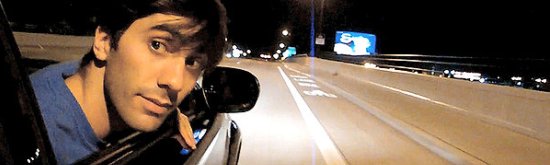
"Nev" in Catfish (Trailer is here)

The documentary Catfish (Or is it really a documentary?) starts out as what seems to be the study of a young girl with an extraordinary amount of artistic talent. The camera follows Yaniv “Nev” Schulman, a 24 year-old photographer living in New York City. One day he receives a package of painting one of his photographs. The artist in question is an 8 year-old girl named Abby living in Michigan, thus the friendship between Nev and Abby begins, and Nev’s two friends decide to document this unusual bond.

Not long afterward Nev befriends Abby and her family, which includes her mother Angela and Abby’s half-sister Megan, but only communicates through email and over the phone. The focus of the relationship between Nev and Abby, shifts to the relationship of Nev and Megan, an attractive and aspiring artist, horse rider, and musician.

The documentary then actually becomes an insightful look at online relationships, platonic or otherwise. Nev and Megan began to have an emotional connection through Facebook, even though in a humorous scene, he’s not quite into the things Megan is into as much as she is, but he is definitely into her and admits to actually deeply caring about her as they talk more and more.

It poses the question: Can a real bond exist when we have no idea who the person really is, or what’s going on at the other end of the web? In this day and age, social networking sites have become so streamlined and easy to use that deception and lies are only a few keystrokes away. Even a simple status update or comment can be carefully calculated to a staggering degree.

As the film progresses, it becomes more and more apparent that Nev is falling for someone based exclusively on the photos, text and a voice over the phone but as it unfolds…all is not as it seems.

The film was marketed as a thriller but the last half hour or so is actually a poignant portrait of lonely souls, and asks another question: is putting up a whole new persona online, whether it’s a skewed version of ourselves or pretending to be someone we’re not, taking away our real selves? Having an internet identity allows us to do or say things we never would do in real life (I.E. trolling) but when does that boundary mark between the illusion and our “real” selves start to blur together? Catfish doesn’t go for the exploitative and shocking route, but instead invokes great sympathy and understanding of those that do develop emotional attachment through a chat box or phone call. It also empathizes with those who try and compensate for dissatisfaction in the real world, past and present.

I dare not go into spoiler territory about what’s really going on in Nev and Megan’s relationship, nor would it be right as to explain why it’s called Catfish to begin with, but it’s a tense yet moving glimpse into how much of an impact social networking has on our lives, and is a tale caution about what’s happening beyond the computer monitor. While some may find the events in the film arguably fit in too well to be a true documentary, it remains an important commentary on the changing social world.


Technology & Culture

"It's technology, not business or government, that's the real driving force behind large-scale societal shifts."

- Sean Parker (creator of Napster)

Seen in Vanity Fair

(Victoria)